


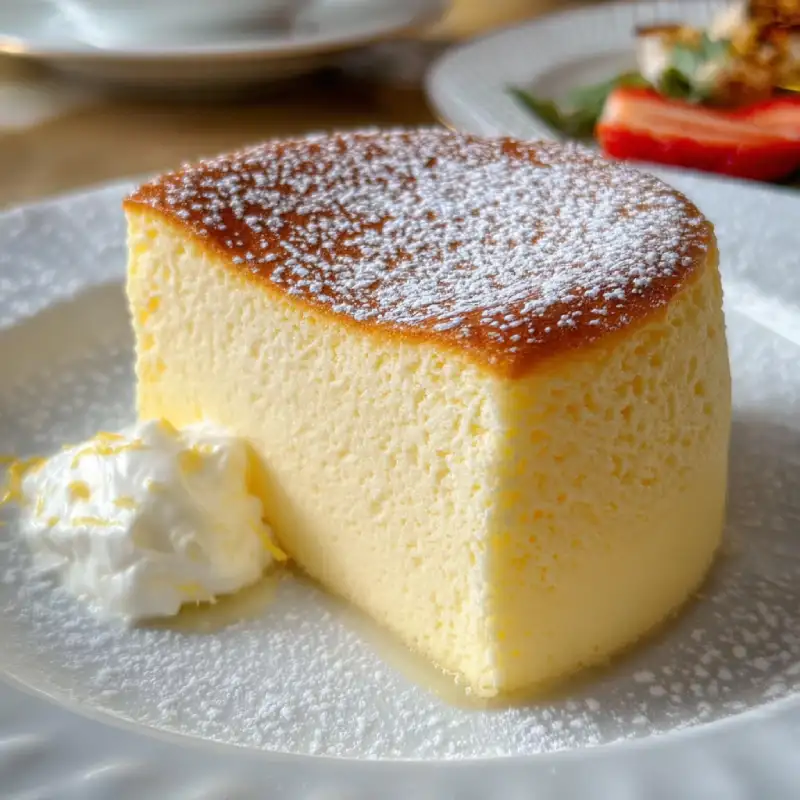
Japanese Cotton Cheesecake Recipe: 5-Step Delicious Guide
Table of Contents
- 1. What is Japanese Cotton Cheesecake?
- 2. Why This Japanese Cotton Cheesecake Recipe: 5-Step Delicious Guide Works
- 3. Key Ingredients for Japanese Cotton Cheesecake
- 3.1. Ingredient Substitutions
- 4. How to Make Japanese Cotton Cheesecake: A 5-Step Guide
- 4.4.1. Step 1: Prepare the Batter
- 4.4.2. Step 2: Whip the Meringue
- 4.4.3. Step 3: Combine and Bake
- 4.4.4. Step 4: Cool and Unmold
- 5. Tips for Perfect Japanese Cotton Cheesecake
- 6. Variations on the Classic Recipe
- 7. Serving and Storage Instructions
- Foire Aux Questions
Prepare yourself for a dessert experience that defies gravity and melts in your mouth! This comprehensive Japanese Cotton Cheesecake Recipe is your ticket to creating a dessert that is as light as air and exquisitely tender. Forget dense, heavy cheesecakes; we’re diving into the world of soufflé-like perfection with this beloved Japanese treat.
My journey into Japanese baking began years ago, and few recipes have captivated me quite like this one. It’s an elegant dessert that looks impressive but is surprisingly achievable for the home baker. Get ready to bake a cake that will impress everyone at your table!
1. What is Japanese Cotton Cheesecake?
Often referred to as “soufflé cheesecake” or “cotton soft cheesecake,” this dessert is a culinary marvel originating from Japan. Unlike its denser New York-style cousin, the Japanese Cotton Cheesecake is incredibly light, airy, and jiggly, with a delicate texture akin to a cloud.
It achieves its signature fluffiness through a unique baking method involving a water bath and gently folded meringue. This creates a cake that is moist, slightly sweet, and utterly irresistible. It’s truly a distinct and wonderful Japanese dessert experience.
2. Why This Japanese Cotton Cheesecake Recipe: 5-Step Delicious Guide Works
This particular Japanese Cotton Cheesecake Recipe has been perfected over countless attempts in my kitchen to ensure consistent success. We break down the process into clear, manageable steps, demystifying what can sometimes feel like an intimidating bake.
From precise ingredient ratios to detailed instructions for achieving the perfect meringue, every element is designed for you to succeed. You’ll be baking a beautifully delicate and fluffy cheesecake in no time. This guide ensures a truly delicious result!
3. Key Ingredients for Japanese Cotton Cheesecake
The magic of this souffle cheesecake lies in a few simple, high-quality ingredients. Using room temperature ingredients is crucial for a smooth, emulsified batter. Don’t skip this step!
- Cream Cheese: Full-fat cream cheese is essential for richness and stability.
- Unsalted Butter: Adds tenderness and flavor.
- Whole Milk: Contributes to the creamy texture.
- Large Eggs: Separated into yolks and whites, they provide structure and lift.
- Granulated Sugar: Sweetens the cake and stabilizes the meringue.
- All-Purpose Flour: Just enough to provide structure without making it dense.
- Cornstarch: Helps achieve that signature soft, delicate crumb.
- Lemon Juice or Cream of Tartar: Aids in stabilizing the meringue for maximum volume.
3.1. Ingredient Substitutions
While the recipe works best with the exact ingredients, sometimes substitutions are necessary. For a dairy-free option, you can experiment with plant-based cream cheese and butter, though results may vary slightly. For milk, any dairy alternative with a similar fat content can work.
If you don’t have cornstarch, you can use a bit more all-purpose flour, but expect a slightly less tender crumb. Always remember that the best results come from following the original recipe closely for this delicate baking recipe.
4. How to Make Japanese Cotton Cheesecake: A 5-Step Guide
Let’s dive into the core of our Japanese Cotton Cheesecake Recipe! This step-by-step guide will walk you through each stage, ensuring you build a masterpiece. Pay close attention to temperatures and mixing techniques for the best outcome.
4.1. Step 1: Prepare the Batter
- Preheat your oven to 325°F (160°C). Grease and line an 8-inch round cake pan with parchment paper, allowing it to extend above the rim. Wrap the bottom and sides of the pan securely with aluminum foil to prevent water from seeping in during the water bath.
- In a heatproof bowl set over a pot of simmering water (bain-marie), combine cream cheese, butter, and milk. Stir continuously until the mixture is smooth and completely melted. Remove from heat.
- Whisk in the egg yolks one at a time until fully incorporated. Sift in the flour and cornstarch, then whisk until the batter is smooth and free of lumps. Set aside to cool slightly.
4.2. Step 2: Whip the Meringue
- In a very clean, dry bowl, beat the egg whites with an electric mixer on medium-low speed until foamy. Add lemon juice or cream of tartar.
- Gradually add the granulated sugar, increasing the speed to medium-high. Continue beating until stiff, glossy peaks form. The meringue should hold its shape but still be soft enough to fold. Do not overmix; a slightly softer meringue is better than a dry, crumbly one for this light and airy dessert.
4.3. Step 3: Combine and Bake
- Gently fold one-third of the meringue into the cream cheese batter to lighten it. Then, carefully fold in the remaining meringue in two additions, taking care not to deflate the mixture. Mix until just combined; a few small streaks of white are fine.
- Pour the batter into the prepared cake pan. Place the cake pan inside a larger roasting pan. Pour hot water into the roasting pan to come about 1 inch up the sides of the cake pan. This creates a water bath. For more on the water bath technique, you can read this guide on Serious Eats.
- Bake for 15 minutes at 325°F (160°C), then reduce the oven temperature to 285°F (140°C) and bake for another 60-70 minutes, or until the top is golden brown and the cheesecake is puffed and set. The center might still be slightly jiggly.
4.4. Step 4: Cool and Unmold
- Turn off the oven and leave the cheesecake inside with the door ajar for 15-20 minutes. This slow cooling prevents cracking and deflating.
- Remove the cheesecake from the oven and the water bath. Let it cool completely on a wire rack before refrigerating for at least 4 hours, or preferably overnight. This is crucial for the texture to set.
- Once chilled, carefully run a thin knife around the edge of the pan before unmolding. Remove the parchment paper, and your beautiful Japanese Cotton Cheesecake Recipe creation is ready!
5. Tips for Perfect Japanese Cotton Cheesecake
Achieving that iconic jiggly, fluffy texture requires a little patience and attention to detail. Here are my top tips for success with this easy cheesecake recipe:
- Room Temperature Ingredients: This is non-negotiable for a smooth, lump-free batter.
- Don’t Overmix the Batter: Once the flour is added, mix only until just combined to avoid developing gluten.
- Perfect Meringue: Aim for stiff but not dry peaks. Overmixed meringue is hard to fold and can lead to a dry cake.
- Gentle Folding: Use a spatula and a light hand to fold the meringue into the batter, preserving as much air as possible.
- Water Bath is Key: This creates a moist, steamy environment in the oven, preventing cracks and ensuring even, gentle cooking.
- Slow Cooling: Allowing the cheesecake to cool slowly in the oven is crucial to prevent dramatic temperature changes that cause cracking.
6. Variations on the Classic Recipe
While the classic Japanese Cotton Cheesecake Recipe is perfect on its own, you can certainly explore variations. Try adding a tablespoon of matcha powder to the flour mixture for a subtle green tea flavor and beautiful color. You could also infuse the milk with vanilla bean for an extra aromatic touch.
For a citrus twist, add a teaspoon of lemon or orange zest to the batter. The possibilities are endless, but always remember to adjust dry ingredients slightly if adding wet flavorings. See others recipes here .
7. Serving and Storage Instructions
This fluffy cheesecake is best served chilled, straight from the refrigerator. Its delicate texture is truly showcased when it’s cool. You can dust it lightly with powdered sugar, serve it with fresh berries, or a dollop of whipped cream.
Store any leftovers in an airtight container in the refrigerator for up to 3-4 days. While it can be frozen, the texture may change slightly upon thawing, becoming a bit denser. For the best experience, enjoy it fresh within a few days of baking.
Foire Aux Questions
Why did my Japanese Cotton Cheesecake crack on top?
Cracking is often caused by baking at too high a temperature, cooling too quickly, or overmixing the meringue. Ensure your oven temperature is accurate and that you follow the slow-cooling process by leaving the cake in the oven with the door ajar. Also, be careful not to over-whip the egg whites into a dry, stiff meringue.
Can I make this Japanese Cotton Cheesecake recipe ahead of time?
Absolutely! This cheesecake benefits immensely from being made a day in advance. It allows the flavors to meld and the texture to firm up perfectly in the refrigerator. Just be sure to store it in an airtight container once completely cooled.
How can I tell if my Japanese Cotton Cheesecake is cooked through?
The cheesecake is done when the top is golden brown and the edges are set. The center might still have a slight jiggle, similar to a soft custard. It will continue to set as it cools. If you insert a wooden skewer, it should come out with moist crumbs, not wet batter.