


Table of Contents
- Introduction: A Taste of Spring in a Jar
- How This Fresh Dandelion Jelly Recipe Works
- Ingredients and Smart Substitutions
- Step-by-Step Instructions: Making Fresh Dandelion Jelly From Scratch
- Expert Tips for Success
- What to Serve With Fresh Dandelion Jelly
- Storing and Reheating Your Dandelion Jelly
- Fresh Dandelion Jelly FAQs
Introduction: A Taste of Spring in a Jar
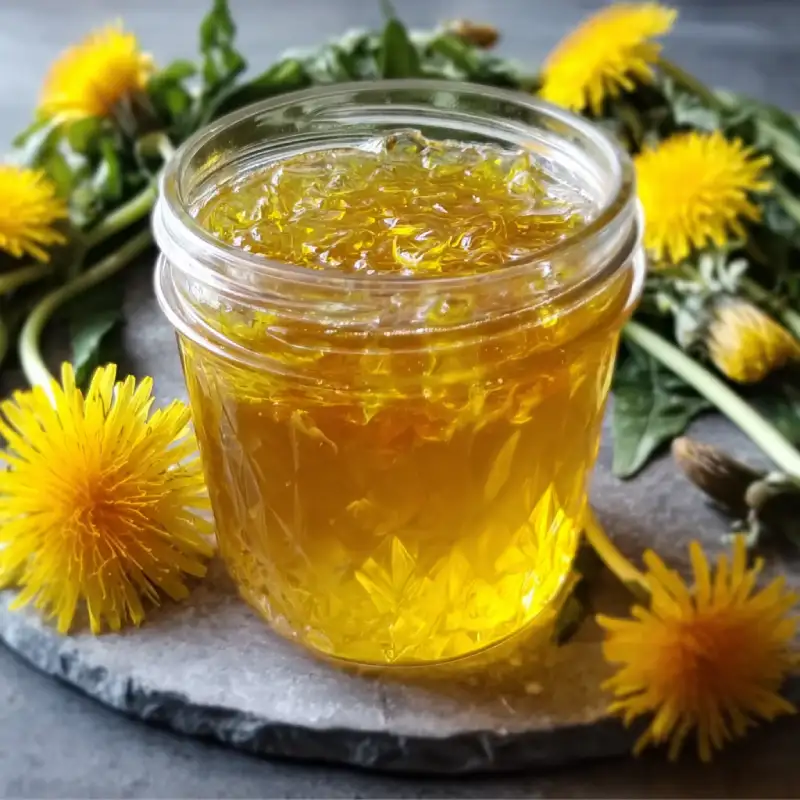
Imagine sunshine captured in a jar, a delicate sweetness that whispers of warm breezes and freshly mown fields. That’s precisely what you get with homemade Fresh Dandelion Jelly. This isn’t your grandma’s tart, green jelly; it’s a golden, shimmering spread with a surprisingly nuanced, honey-like flavour and a hint of earthy floral notes that dances on the tongue. It offers a light, almost ethereal texture that melts beautifully on toast or scones. It’s an adventure for your taste buds, a little piece of edible rebellion against the ordinary, and incredibly rewarding to make. For more inspiring culinary journeys, See more easy recipes.
From Our Garden to Your Table: Why I Love Making Dandelion Jelly
There’s a special kind of magic in transforming the humble, often-maligned dandelion into something so exquisite. For me, it’s about connecting with nature, celebrating the abundance of local foraging, and creating something truly unique from ingredients often overlooked. It’s an edible ode to spring, turning backyard ‘weeds’ into gourmet gold.
The Unexpected Flavor of Dandelions: It’s Not What You Think
Forget any preconceived notions of bitterness. When prepared correctly, dandelion petals yield a flavour profile that’s sweet, subtly floral, and remarkably similar to honey, with almost a citrusy finish. It’s delicate, complex, and utterly captivating – a taste that will surprise and delight every time.
How This Fresh Dandelion Jelly Recipe Works
- Capturing Floral Sweetness: Infusion Method Explained: The secret lies in gently steeping the dandelion petals in hot water, creating a ‘dandelion tea.’ This infusion extracts all the wonderful, subtle flavours without any of the bitterness that can come from other parts of the plant.
- Achieving the Perfect Set: Balancing Pectin and Acidity: Like all great jellies, a perfect set is crucial. We use powdered pectin, which acts as our gelling agent, in precise proportions with sugar and a specific amount of dandelion infusion. The acidity from the lemon juice is vital, as it helps activate the pectin, ensuring a firm yet spreadable jelly.
- Bright & Tangy: The Role of Citrus: Beyond aiding the pectin, fresh lemon juice brightens the overall flavour profile of the Fresh Dandelion Jelly, adding a much-needed tang that balances the sweetness and enhances the delicate floral notes, preventing it from tasting flat. It turns a good jelly into a sensational one.
Ingredients and Smart Substitutions
Here is what you need and why:
Dandelion Petals: The Star Ingredient (Harvesting & Preparation): This is non-negotiable for Fresh Dandelion Jelly! You’ll need a generous amount, carefully harvested from pesticide-free areas. See our tips below for detailed harvesting and preparation instructions, as removing all the green bits is crucial to avoid bitterness.
Granulated Sugar: Sweetness and Preservation: White granulated sugar provides the necessary sweetness and, crucially, works with pectin to achieve the jelly’s set. It also acts as a natural preservative when canned. While some might consider reducing sugar, it can impact the set and shelf stability. For best results, stick to the recommended amount.
Liquid Pectin: Ensuring the Jelly Sets Firmly: We’re using liquid fruit pectin here, which is designed to work with specific sugar concentrations. Do not confuse it with powdered pectin, as they activate differently. Follow the package instructions carefully for best results. Brands like Certo are widely available, or you might explore making your own pectin if you’re feeling adventurous!
Lemon Juice: For Brightness and Set, Alternatives for Acidity: Freshly squeezed lemon juice is essential. It provides the acidity needed for pectin to set and brightens the flavour of the Fresh Dandelion Jelly. If fresh lemons are unavailable, bottled lemon juice can be used, though fresh is always preferred for taste. For a subtle twist, clear apple cider vinegar could technically provide acidity, but lemon juice offers the best flavour balance.
Step-by-Step Instructions: Making Fresh Dandelion Jelly From Scratch
Follow these step-by-step photos:
1. Collecting and Preparing Dandelion Petals
Head to a clean, pesticide-free area, ideally in the mid-morning when dandelions are fully open. Pick about 4 cups of fully bloomed dandelion heads. Once home, meticulously remove all the yellow petals from the green base. This is the most time-consuming step but is absolutely crucial; any green bits will introduce bitterness. Aim for 2 cups of pure yellow petals.
2. Creating the Dandelion Infusion
Place the 2 cups of dandelion petals into a heatproof bowl or measuring cup. Bring 4 cups of water to a rolling boil, then immediately pour it over the petals. Stir gently to ensure all petals are submerged. Cover the bowl and let it steep for at least 4 hours, or preferably overnight, to allow the floral flavour to fully infuse. The liquid should turn a lovely golden colour.
3. Filtering and Measuring the Liquid
Strain the dandelion infusion through a fine-mesh sieve lined with cheesecloth or a clean coffee filter. Squeeze out every last drop of liquid from the petals. You should aim for exactly 3 cups of dandelion liquid. If you have too much, return it to a saucepan and gently reduce it. If you have too little, top it up with a small amount of boiled water, ensuring it stays at 3 cups.
4. Combining Ingredients and Cooking to Temperature
Prepare your water bath canner apparatus. In a large, heavy-bottomed pot, combine the 3 cups of dandelion infusion, the granulated sugar, and the lemon juice. Bring the mixture to a full rolling boil over high heat, stirring constantly until all the sugar is dissolved. Once boiling, stir in the liquid pectin quickly. Return the mixture to a full, rolling boil that cannot be stirred down, and boil hard for exactly 1 minute, stirring constantly.
5. Checking for the Set: The Spoon Test
Immediately after the 1-minute boil, remove the pot from the heat. Dip a cold metal spoon (chilled in the freezer for a few minutes) into the hot jelly. Lift the spoon and tilt it. If the jelly forms two drops that merge and fall off as a sheet, it’s ready. Alternatively, spoon a small amount onto a chilled plate, wait a minute, then push it with your finger; if it wrinkles, it’s set. Skim off any foam that may have formed on the surface.
6. Filling and Sealing Jars (Water Bath Canning for Shelf Stability)
Ladle the hot Fresh Dandelion Jelly immediately into hot, sterilized canning jars (leaving 1/4 inch headspace). Wipe rims clean, center new lids, and apply bands until fingertip-tight. Place jars into your prepared boiling water canner, ensuring they are covered by at least 1 inch of water. Bring to a rolling boil and process pint jars for 10 minutes (adjusting for altitude if necessary). Carefully remove jars and let them cool, undisturbed, on a towel for 12-24 hours. Check seals; unsealed jars should be refrigerated and consumed within 3 weeks.
Expert Tips for Success
- Harvesting Best Practices for Petal Quality: Always pick dandelions from areas away from roads, pet traffic, and chemical sprays. Choose fully open, vibrant yellow blooms on a sunny, dry day, ideally mid-morning after the dew has evaporated. This ensures maximum flavour and vitality.
- Avoiding Bitterness: Petal Prep Details: The green sepals and any part of the flower head’s base are bitter. Be patient and meticulous when separating the yellow petals. It’s the most crucial step for a delightfully sweet jelly.
- Achieving Clarity: Straining Techniques: For crystal-clear jelly, use several layers of cheesecloth or a coffee filter inside your fine-mesh sieve when straining the dandelion infusion. Avoid squeezing too hard if using just a sieve, as this can force sediment through.
- Troubleshooting Common Jelly Issues (Too Runny, Too Stiff): If your jelly doesn’t set, it might be due to incorrect pectin-to-sugar ratio, insufficient boiling time, or lack of acidity. For runny jelly, you can reprocess it with more pectin and a re-boil (check pectin package for specific instructions). If it’s too stiff, it’s often due to over-boiling or too much pectin; unfortunately, this can’t be easily fixed.
- Safety First: Proper Canning Procedures: Always follow tested canning recipes and guidelines from reputable sources (e.g., USDA, National Center for Home Food Preservation). Use clean, sterilized jars and new lids. Incorrect canning can lead to spoiled food and health risks.
What to Serve With Fresh Dandelion Jelly
Breakfast & Brunch Pairings
Fresh Dandelion Jelly is simply sublime on warm, buttered toast, fluffy pancakes, or freshly baked scones. Its honey-like sweetness makes it a perfect companion for a Sunday breakfast spread. Try it dolloped onto natural yogurt or swirled into oatmeal for an extra touch of spring.
Cheese Boards & Savory Applications
Don’t limit this gem to breakfast! Dandelion jelly makes an unexpectedly sophisticated addition to a cheese board. Pair it with creamy brie, tangy goat cheese, or a sharp cheddar. Its floral notes also complement roasted chicken or pork, offering a sweet-savory glaze that’s truly unique.
Dessert Enhancements
Consider using it as a filling for thumbprint cookies, a glaze for a simple pound cake, or even as a surprising layer in a trifle. A spoonful over vanilla bean ice cream is a simple yet elegant dessert.
Storing and Reheating Your Dandelion Jelly
Shelf-Stable Storage: Canned Jelly
Jars of Fresh Dandelion Jelly properly processed in a water bath canner will be shelf-stable for up to one year in a cool, dark place. Always check seals before opening; if a lid is unsealed or bulges, discard the contents.
Refrigeration: Opened Jars and Non-Canned Jelly
Once a jar is opened, it must be refrigerated and consumed within 3-4 weeks. Any jelly that wasn’t properly water bath canned should also be stored in the refrigerator and will be good for about 3 weeks. There’s no need to ‘reheat’ jelly, as it’s typically served at room temperature or chilled.
Freezing Jars (If Not Water Bath Canned)
If you prefer not to water bath can, you can freeze your jelly in freezer-safe jars or containers, leaving ample headspace for expansion. It will last for several months in the freezer. Thaw in the refrigerator before using.
Fresh Dandelion Jelly FAQs
Is it safe to eat dandelions?
How many dandelions do I need?
Can I use natural pectin?
How long does dandelion jelly last?
Why is my jelly not setting?
Fresh Dandelion Jelly
- Total Time: 40 minutes
- Yield: 5-6 half-pint jars
Description
Unlock the unexpected sweetness of springtime with this delightful Fresh Dandelion Jelly recipe. It transforms humble dandelion petals into a golden, honey-like spread with delicate floral notes, perfect for breakfast or a gourmet cheese board.
Ingredients
- 4 cups fresh dandelion flower heads (yields 2 cups petals)
- 4 cups boiling water
- 1 package (6 oz) liquid fruit pectin
- 5 cups granulated sugar
- 1/4 cup fresh lemon juice
Instructions
- Harvest & Prepare Dandelions: Collect about 4 cups of fully open dandelion heads from a clean, pesticide-free area. Carefully remove all yellow petals, discarding green bits. You should have about 2 cups of petals.
- Make Dandelion Infusion: Place petals in a heatproof bowl. Pour 4 cups of boiling water over them. Stir, cover, and let steep for at least 4 hours, or overnight, then strain through cheesecloth to yield 3 cups of liquid.
- Prepare for Canning: Sterilize your canning jars and lids as per manufacturer’s instructions. Set up your water bath canner.
- Cook Jelly: In a large, heavy-bottomed pot, combine the 3 cups dandelion infusion, granulated sugar, and lemon juice. Bring to a full rolling boil over high heat, stirring constantly until sugar dissolves.
- Add Pectin & Boil: Stir in the liquid pectin. Return to a full, rolling boil that cannot be stirred down, and boil hard for exactly 1 minute, stirring constantly.
- Test for Set: Remove from heat. Skim foam. Perform the cold spoon test: if jelly sheets off the spoon, it’s set.
- Fill & Process Jars: Ladle hot jelly into hot sterilized jars, leaving 1/4-inch headspace. Wipe rims, center lids, and apply bands fingertip-tight. Process in a boiling water canner for 10 minutes (adjust for altitude).
- Cool & Store: Remove jars and let cool for 12-24 hours. Check seals. Store properly sealed jars in a cool, dark place for up to 1 year. Refrigerate opened or unsealed jars.
- Prep Time: 30 mins (plus 4 hrs steeping)
- Cook Time: 10 mins (plus canning)