


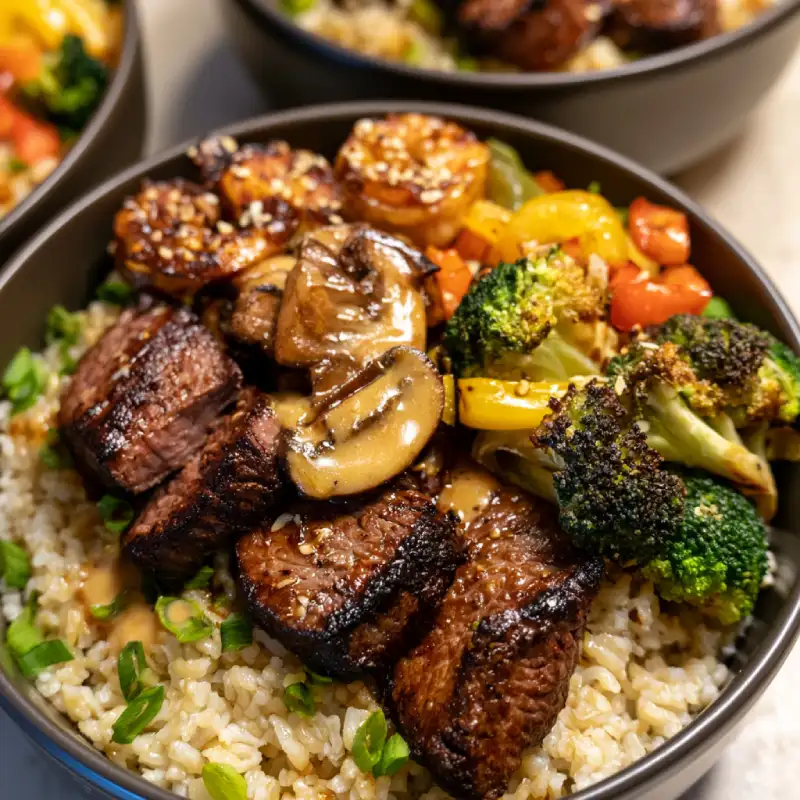
Introduction: Your Ultimate Hibachi Steak Bowl Experience
Imagine perfectly seared, tender steak, vibrant, crisp-tender vegetables, and a rich, savory-sweet sauce that ties everything together into a symphony of flavor and texture. That’s exactly what awaits you with these incredible Hibachi Steak Bowls! This isn’t just another dinner recipe; it’s an experience, bringing the sizzling excitement and deliciousness of your favorite hibachi grill right into your own kitchen. Whether you’re a seasoned home cook or just starting out, this recipe is designed to deliver maximum flavor with surprisingly little fuss. For more culinary adventures and easy-to-follow guides, you can always See more good recipes here!
Why This Recipe Is Your Weeknight Hero
Let’s face it, weeknights can be a culinary challenge. You want something delicious, satisfying, and ideally, not overly complicated. This Hibachi Steak Bowl recipe ticks all those boxes and more! It’s super customizable, comes together relatively quickly, and tastes far more gourmet than the effort it requires. Plus, it’s a fantastic way to utilize leftover rice or transform fresh produce into a vibrant meal.
My Journey to Perfecting Hibachi at Home
My love affair with hibachi started years ago at a local Japanese steakhouse. The theatrical cooking, the incredible aromas, and of course, the taste – it was all mesmerizing. I quickly became obsessed with recreating that magic at home. After countless experiments, tweaking sauces, trying different steak cuts, and perfecting cooking techniques, I finally cracked the code. This recipe is the culmination of that delicious journey, designed to bring you the best possible hibachi experience without needing a professional hibachi chef on standby!
How This Hibachi Steak Bowl Recipe Works
The beauty of these Hibachi Steak Bowls lies in understanding a few core principles that guarantee success every time. It’s about leveraging high heat, fresh ingredients, and balanced flavors.
Achieving Tender, Flavorful Steak Every Time
The secret to succulent hibachi steak is twofold: choosing the right cut and mastering the sear. We’ll marinate our steak briefly to infuse it with umami and tenderness, then cook it quickly over intense heat to create a beautiful crust while keeping the inside juicy and perfectly pink. Resting the steak is also a non-negotiable step to lock in those precious juices.
The Perfect Balance of Sweet and Savory Sauce
The hibachi sauce is the heart of the bowl, and ours is a harmonious blend of salty soy, sweet mirin, zingy ginger, and pungent garlic. It’s designed to coat every ingredient beautifully, enhancing their natural flavors without overpowering them. A dash of sugar helps achieve that addictive, glossy finish.
Crisp-Tender Vegetables without Overcooking
Nobody wants soggy vegetables! We’ll cook our veggies quickly over high heat, ensuring they retain their vibrant color, a slight crunch, and all their nutritional goodness. Timing is key here – adding them in stages to account for different cooking times.
Building a Bowl with Varied Textures
A truly great bowl is all about harmonious textures. We combine the tender chew of the steak, the crisp snap of the vegetables, and the fluffy comfort of rice, all coated in that luscious sauce. This layered approach makes every bite an exciting experience.
Essential Ingredients & Smart Substitutions
Quality ingredients make all the difference in these Hibachi Steak Bowls. Here’s what we need and why.
The Best Steak Cuts for Hibachi (and why)
For hibachi, you want a cut that’s flavorful, tender, and cooks quickly. My top recommendations are sirloin (a great balance of flavor and tenderness), ribeye (more marbling, incredibly rich), or skirt/flank steak (needs to be sliced against the grain for tenderness). Avoid super lean cuts like round steak, as they can dry out quickly when seared.
Soy Sauce: Choosing Quality for Flavor Depth
A good quality soy sauce is crucial. Opt for a naturally brewed, low-sodium soy sauce. Brands like Kikkoman or Tamari (for gluten-free) offer excellent depth of flavor. The difference between a cheap soy sauce and a good one is truly noticeable in the final dish.
Mirin vs. Sake: Understanding the Sweetness Factor
Mirin is a sweet Japanese rice wine, essential for that classic hibachi sauce flavor. It adds a subtle sweetness and a beautiful glaze. If you don’t have mirin, you can substitute with dry sherry mixed with a pinch of sugar, or even a very small amount of white wine vinegar with sugar. Sake is also a rice wine but less sweet and more alcoholic; use mirin for sweetness, sake for umami depth if desired, but mirin is the priority.
Ginger & Garlic: Freshness Matters
Always use fresh ginger and garlic! Pre-minced jars simply don’t compare in terms of pungent aroma and vibrant flavor. A microplane makes quick work of grating your ginger and garlic directly into the sauce or marinade.
Vegetables: Customizing Your Bowl’s Crunch
The classic hibachi vegetables include zucchini, onions, carrots, and mushrooms. Feel free to customize! Bell peppers, snap peas, broccoli florets, or even thinly sliced cabbage would also be delicious. The key is to cut them into similar-sized pieces for even cooking.
Oils: High Heat for Searing
For high-heat cooking like hibachi, you need an oil with a high smoke point. Vegetable oil, canola oil, grapeseed oil, or avocado oil are all excellent choices. Olive oil has a lower smoke point and can burn, imparting a bitter flavor.
Step-by-Step Instructions for Perfect Hibachi Steak Bowls
Let’s get cooking! Follow these steps for an authentic hibachi experience at home.
1. Prepping Your Ingredients: The Key to Efficiency
Mise en place, or ‘everything in its place,’ is absolutely vital here. Slice your steak, chop your vegetables, mince your garlic and ginger, and whisk together your sauce ingredients. Having everything ready before you start cooking ensures a smooth, stress-free process once the heat is on. This entire dish moves quickly, so be prepared!
2. Marinating Your Steak for Maximum Flavor
In a medium bowl, combine your sliced steak with a tablespoon of soy sauce, a drizzle of oil, and a pinch of black pepper. Toss to coat evenly. Let this marinate for at least 15-20 minutes at room temperature, or up to an hour in the refrigerator. This brief marinade tenderizes the steak and infuses it with initial savory notes.
3. Cooking the Steak: Achieving the Perfect Sear
Heat a large skillet or wok over high heat until it’s smoking slightly. Add a tablespoon of your high-smoke-point oil. Once shimmering, add about half of your marinated steak in a single layer. Don’t crowd the pan! Sear for 1-2 minutes per side for medium-rare, or longer for your desired doneness. Remove the cooked steak to a plate and cover loosely with foil. Repeat with the remaining steak. Remember to allow it to rest!
4. Sautéing Vegetables: Timing is Everything
In the same skillet (add a little more oil if needed), add the harder vegetables first, such as carrots and onions. Stir-fry for 2-3 minutes until slightly softened. Then, add the zucchini and mushrooms (and any other tender veggies) and continue to stir-fry for another 3-4 minutes until crisp-tender and brightly colored. Don’t overcook them – they should still have a bite!
5. Whipping Up the Signature Hibachi Sauce
While the vegetables are cooking, combine all the sauce ingredients – soy sauce, mirin, sesame oil, sugar, ginger, and garlic – in a small bowl. Whisk until the sugar dissolves. Once the vegetables are done, pour the sauce directly into the hot pan with the vegetables. Stir continuously for about 1 minute until the sauce thickens slightly and coats the vegetables beautifully. This quick cook enhances the flavors.
6. Assembling Your Bowls: Layering for Delight
To assemble, start with a base of fluffy steamed rice in each bowl. Top with the sautéed hibachi vegetables, then arrange the rested, sliced steak over the veggies. Drizzle any extra sauce from the pan over everything. Garnish with sesame seeds, green onions, and maybe a sprinkle of red pepper flakes if you like a little heat. Serve immediately and enjoy your homemade Hibachi Steak Bowls!
Expert Tips for Hibachi Success
- Importance of High Heat Cooking: This is non-negotiable for hibachi. You want a very hot pan to get that coveted sear on the steak and crisp-tender texture on your vegetables. Don’t be afraid of a little smoke!
- Don’t Crowd the Pan: Why Space Matters: Crowding the pan lowers the temperature dramatically, leading to steaming instead of searing. Cook your steak and vegetables in batches if necessary to ensure even cooking and that beautiful caramelized crust.
- Resting the Steak: A Non-Negotiable Step: After searing, always transfer the steak to a cutting board and let it rest for 5-10 minutes before slicing. This allows the juices to redistribute, resulting in incredibly tender and flavorful meat.
- Adjusting Sauce Sweetness to Taste: The provided sauce recipe offers a balanced sweet and savory profile. If you prefer it sweeter, add a touch more sugar or mirin. For more savory, a dash more soy sauce. Taste and adjust to your preference!
- Prepping Ahead for Faster Weeknight Meals: You can chop all your vegetables hours in advance. Whisk together your sauce ingredients and store them in a jar in the fridge. This way, active cooking time on a weeknight is minimal.
What to Serve with Your Hibachi Steak Bowls
Perfect Rice Pairings (White, Brown, Fried)
A bed of perfectly cooked white rice is the traditional pairing for Hibachi Steak Bowls, soaking up all that delicious sauce. Brown rice offers a nuttier flavor and more fiber, while a quick batch of homemade fried rice would elevate the meal even further, making it a true hibachi feast. Consider making some extra rice the day before!
Simple Salad Options
A light, crisp cucumber salad with a simple vinaigrette, or a refreshing green salad with a ginger-sesame dressing, would be a wonderful contrast to the rich flavors of the bowl. It adds a fresh, palate-cleansing element.
Additional Sauces and Toppings
Beyond the main sauce, feel free to offer extra drizzles of sriracha for heat, a squeeze of fresh lime juice for brightness, or a sprinkle of additional toasted sesame seeds for crunch. A delicious spicy mayo can also be a wonderful addition!
Storing & Reheating Your Hibachi Leftovers
Best Practices for Refrigeration
Allow any leftover Hibachi Steak Bowls to cool completely before transferring them to an airtight container. Refrigerate promptly within two hours of cooking. They will keep well in the refrigerator for up to 3-4 days.
Reheating Steak and Vegetables Safely
The best way to reheat is gently. For the steak and vegetables, a quick toss in a hot skillet over medium-high heat is ideal. Don’t blast it in the microwave if you want to retain texture. A little splash of water or broth can help rehydrate. Stir-fry until just heated through.
Tips for Maintaining Texture and Flavor
To keep the rice from drying out in the microwave, add a tablespoon of water before reheating and cover the bowl. For the steak, try to avoid overcooking it when reheating, as it can become tough. The goal is to warm it, not cook it again. If you prefer, you can reheat the components separately (rice, then veggies, then steak) and recombine.
Frequently Asked Questions
Can I use a different protein?
How can I make this spicier?
Is this recipe gluten-free?
What’s the best way to get a good char on the steak?
Delicious Hibachi Steak Bowls
- Total Time: 35 minutes
- Yield: 4 servings
Description
Unleash the flavors of Japan right in your kitchen with these easy-to-make Hibachi Steak Bowls. This step-by-step recipe guides you to perfect, tender steak and crisp vegetables glazed in a savory-sweet sauce.
Ingredients
- 1 lb sirloin or ribeye steak, thinly sliced
- 1 tbsp soy sauce (use tamari for GF)
- 1 tbsp vegetable oil, plus more for cooking
- 1/4 tsp black pepper
- 1 medium zucchini, sliced
- 1/2 medium onion, thinly sliced
- 1 cup sliced mushrooms
- 1 tbsp grated fresh ginger
- 2 cloves garlic, minced
- 2 cups cooked white rice, for serving
- Sesame seeds and sliced green onions, for garnish
- 1/4 cup soy sauce (use tamari for GF)
- 2 tbsp mirin (sweet rice wine)
- 1 tbsp sesame oil
- 1 tbsp granulated sugar
- 1 tsp grated fresh ginger
- 1 tsp minced garlic
Instructions
- Prepare Steak: In a bowl, toss sliced steak with 1 tbsp soy sauce, 1 tbsp vegetable oil, and black pepper. Let marinate for 15-20 minutes at room temperature.
- Make Sauce: Whisk together all Hibachi Sauce ingredients in a small bowl until sugar dissolves. Set aside.
- Cook Steak: Heat a large skillet or wok over high heat with 1-2 tbsp oil until shimmering. Add half the steak in a single layer; sear for 1-2 minutes per side until browned. Remove to a plate, cover loosely. Repeat with remaining steak.
- Sauté Vegetables: In the same skillet, add a little more oil if needed. Add onions and carrots (if using), stir-fry for 2-3 minutes. Add zucchini and mushrooms, stir-fry for another 3-4 minutes until crisp-tender.
- Combine and Serve: Pour the prepared Hibachi Sauce over the vegetables. Stir constantly for 1 minute until sauce thickens and coats the veggies. Return cooked steak to the pan, tossing gently to coat.
- Assemble Bowls: Divide cooked rice among serving bowls. Top with the steak and vegetable mixture. Garnish with sesame seeds and green onions. Serve immediately.
- Prep Time: 20 mins
- Cook Time: 15 mins